
Manufacturing Process
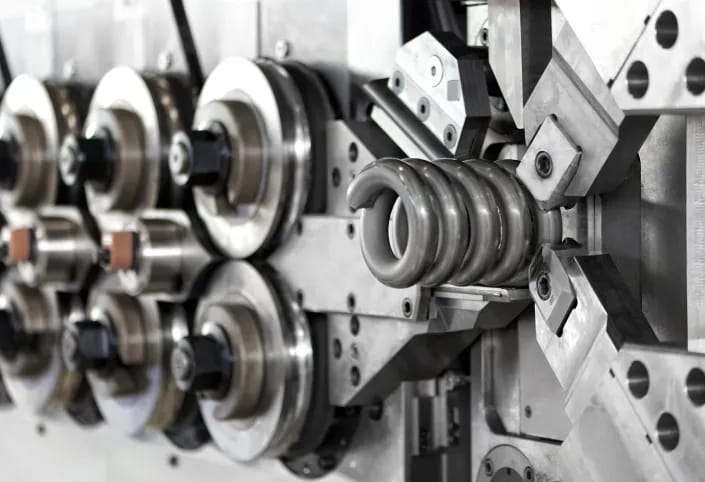
Spring Coiling
Spring coiling is a manufacturing process used to produce helical springs by winding wire around a rotating mandrel or arbor. It’s widely used in industries like automotive, aerospace, electronics, and consumer products. Cold Coiling Done at room temperature Used for smaller diameter wires Hot Coiling Performed at high temperatures Suitable for thicker wires and heavy-duty springs CNC Spring Coiling Uses computer-controlled machines for precision and automation, High efficiency and consistency, Common in mass production
Materials Used:
• Stainless Steel – SS 302, SS 304, SS 316
• Spring Steel – Grade I, Grade II, Grade III,
• Music Wire • Hastelloy C-276 • Inconel X-7501
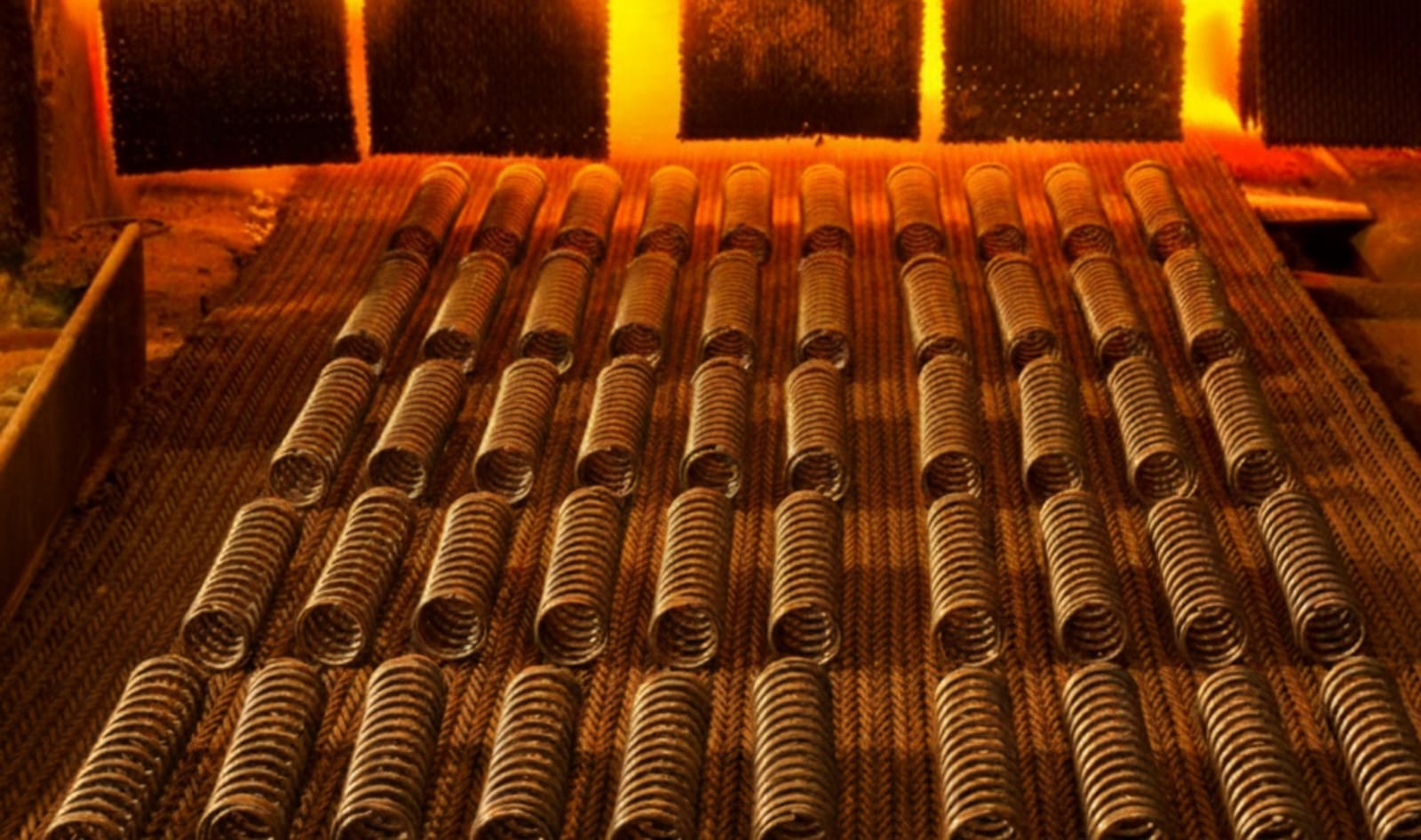
Hardening and Tempering Process
Hardening increases strength and wear resistance, but makes the material brittle if left untreated.
Spring hardening and tempering is a combined heat-treatment process used to produce springs with high strength and elasticity: first, the steel is heated to about 780–950°C to form Austenite, held for uniform temperature, and then rapidly quenched in oil or water to transform it into hard but brittle Martensite; immediately after hardening, tempering is carried out by reheating the steel to around 300–500°C, holding it for a specific time, and then cooling in air, which reduces brittleness while retaining sufficient hardness, resulting in a balanced combination of toughness, fatigue resistance, and a high elastic limit required for spring applications.
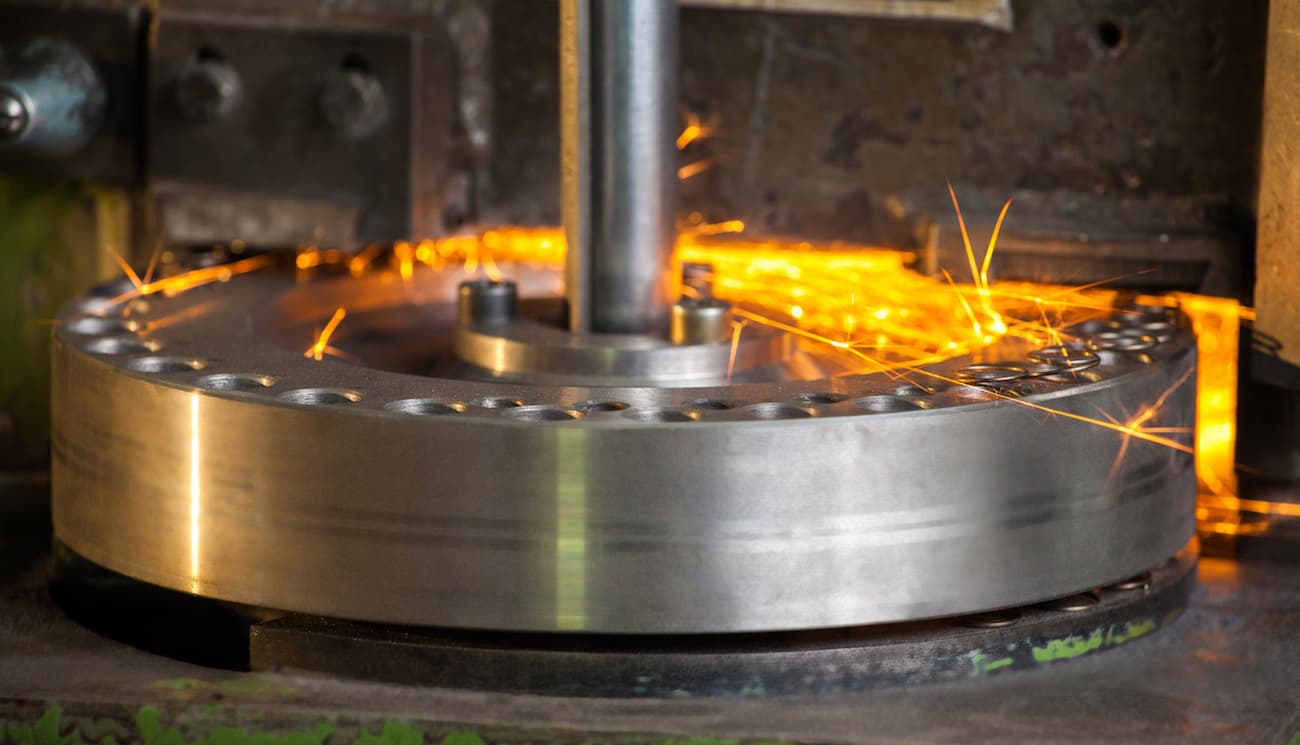
Grinding
Spring grinding is a finishing process performed after heat treatment (hardening and tempering) to ensure that the ends of a coil spring are flat, smooth, and perfectly perpendicular to the spring axis for proper seating and load distribution. In this process, the spring ends are pressed against rotating abrasive grinding wheels on a spring end grinding machine, where material is gradually removed to achieve the required height, squareness, and surface finish. Both ends are usually ground simultaneously to maintain parallelism, and coolant is often used to prevent overheating and preserve the spring’s mechanical properties. This operation improves stability, reduces stress concentration, ensures uniform load transfer, and enhances the overall performance and service life of the spring.
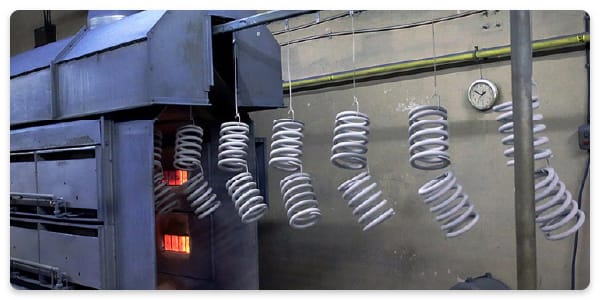
Plating
The plating process is a surface finishing method used to coat a spring with a thin layer of metal such as Zinc Passivation (White/Yellow) Blackodising,Nickel Plating, Electropolishing, Powder Coating , Zinc Blackosing to improve corrosion resistance, appearance, and wear properties. The spring is first cleaned by degreasing and acid pickling to remove dirt, oil, and oxides, then immersed in an electrolyte solution where metal ions are deposited on its surface through Electroplating using electric current. After coating, the spring is rinsed, dried, and sometimes baked to remove hydrogen and prevent embrittlement, resulting in a smooth, protective layer that increases durability and service life.
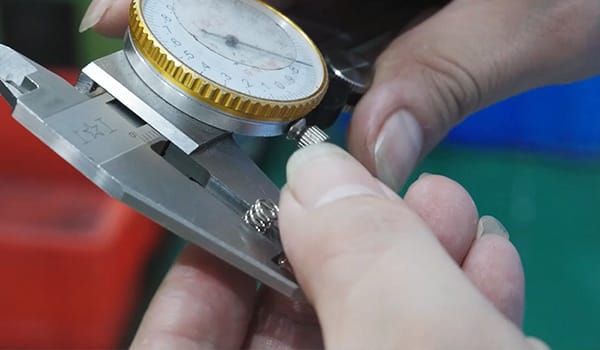
Testing
Spring testing is the quality-checking stage used to ensure that a spring meets required mechanical and dimensional standards before use. It includes checking dimensions like free length, wire diameter, and coil pitch, as well as performance tests such as load-deflection testing to verify stiffness and load-bearing capacity. Springs are also tested for fatigue strength by repeatedly compressing or extending them to simulate real working conditions, and sometimes hardness testing is done to confirm proper heat treatment. These tests ensure th